Social studies isn’t just about maps and historical dates—it’s about understanding our communities, our responsibilities, and how we relate to others. For children in special education, social studies offers a powerful way to build life skills like communication, decision-making, and empathy.
But learning these concepts doesn’t only happen in a classroom. For families of children with special needs, home care agencies can play a unique and supportive role in reinforcing social studies goals in everyday life.
Social Studies Goals for Special Education Students
Here are some core social studies goals often included in special education plans, with examples and real-life applications:
1. Understanding Community and Citizenship
Learning about family, school, and the people who help us (like firefighters, doctors, or delivery drivers) helps children recognize their place in the world.
Goal Example:
Identify 5 community helpers and what they do.
How Home Care Can Help:
Caregivers can take neighborhood walks and help children photograph and label local community helpers (mail carrier, crossing guard, etc.). These real-life interactions make learning stick.
2. Following Rules and Understanding Responsibility
Rules help keep everyone safe, and learning why they matter can build self-awareness.
Goal Example:
Follow classroom or home rules with minimal reminders.
Home Support Tip:
Caregivers can reinforce home routines (like cleaning up toys) and explain the “why” behind rules in a calm, visual way. This also helps with emotional regulation.
3. Learning Time and History Concepts
Concepts like past, present, and future can be tricky, so students start with personal timelines and simple historical stories.
Goal Example:
Sequence 3 life events on a visual timeline.
Home Care Connection:
A caregiver can help create a scrapbook with photos of birthdays, holidays, or “firsts” to teach sequencing and reflection.
4. Exploring Culture and Celebrations
Social studies teaches students to appreciate traditions and learn about others. This also builds empathy and curiosity.
Goal Example:
Identify 2 holidays and how they’re celebrated.
Home Care Activity:
Celebrate holidays like Dr. Martin Luther King Jr. Day or Earth Day at home with crafts or read-aloud books. Caregivers can help children understand the meaning behind the celebration.
5. Practicing Map and Direction Skills
Understanding where things are—at school, in the neighborhood, or on a map—helps students become more independent.
Goal Example:
Use a simple map to find a location (e.g., library, bathroom, classroom).
Caregiver Support:
Caregivers can turn daily routines into geography lessons: finding rooms in the house, learning left vs. right, or identifying “near” and “far” on a neighborhood walk.
How Home Care Agencies Can Support Learning
For families juggling therapies, school, and care, a home care agency can be a valuable educational partner:
- Provide trained caregivers who can reinforce social studies skills during play, routines, or community outings.
- Use visuals, social stories, and hands-on activities to match each child’s learning style.
- Promote social-emotional learning by modeling empathy, turn-taking, and conversation during daily care.
- Support regulation and readiness to learn by helping children transition smoothly and stay focused through calming strategies.
- Offer respite to parents, giving them space to plan, teach, or simply recharge.
How Caregivers Help Bring Social Studies to Life at Home
Caregivers typically specialize in supporting families of children with diverse learning needs. They use day-to-day routines to reinforce social studies in fun, practical ways.
Real-Life Activities That Support Learning
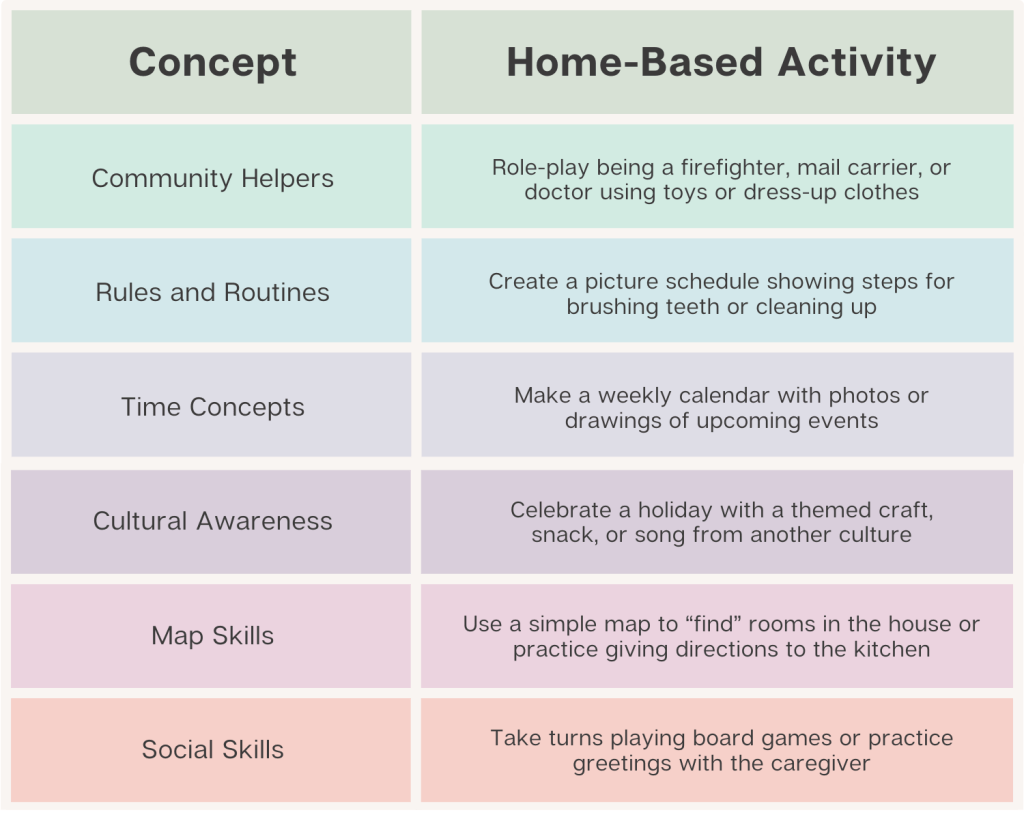
Here are specific examples of how caregivers make social studies relevant and hands-on:
Common Challenges and How to Overcome Them
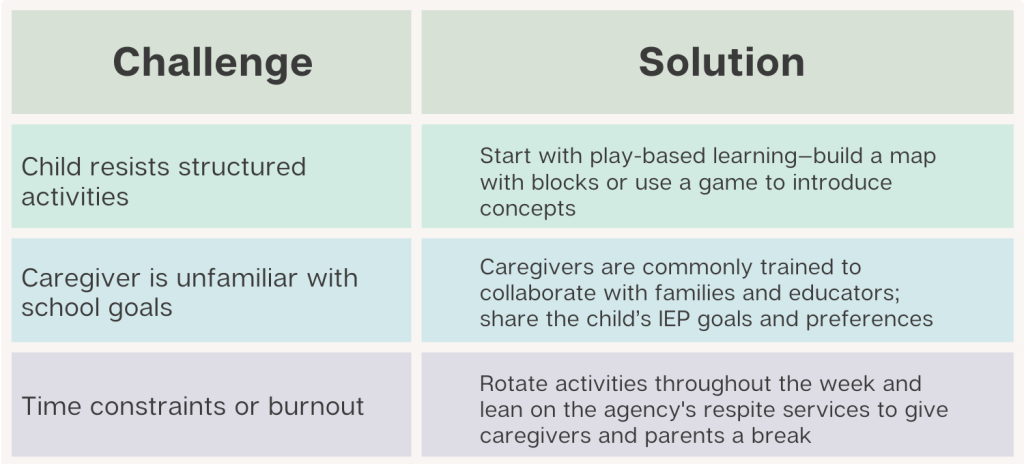
Even with the right goals in place, families may face roadblocks. Here are a few, with tips for support:
Financial Support: Getting Paid to Care for Your Child
Agencies like Caretech assist families with applying for financial assistance. These programs may provide funding for professional in-home caregivers or allow a parent or relative to receive compensation for caring for their child with special needs at home.
Final Thought
Social studies is about connection—to our communities, cultures, and each other. For children with special needs, learning these concepts at their own pace, in their own home, can make all the difference. With Caretech’s personalized support, families can turn everyday moments into meaningful learning experiences that prepare children to thrive in the real world.
 Care at Home Blog
Leave a comment